
License Plate Recognition Camera: What It Is and How It Works in an ALPR System
A license plate recognition camera works with ALPR software and other system components to capture, process, and understand vehicle data in real-world environments.
1. What Is a License Plate Recognition Camera?
A license plate recognition camera is a camera used to capture visual input that allows an ALPR system to identify and process vehicle information. These cameras are commonly installed at entrances, exits, roadways, parking areas, and other locations where vehicles pass through defined paths. Their job is to reliably collect image data under changing conditions such as speed, lighting, and weather. That data becomes useful only when it is processed by the rest of the ALPR system.
1.1 How a license plate recognition camera differs from standard surveillance cameras
A license plate recognition camera is typically configured to capture **vehicle data**, not general activity. This means it is positioned, aimed, and tuned to consistently capture information related to vehicles as they move, rather than people or wide scenes. Settings such as shutter speed, focus range, and field of view are chosen with vehicle movement in mind.
From a hardware perspective, the camera is still an imaging device. What makes a License Plate Recognition Camera effective in an ALPR system is how well it supports the capture of usable vehicle data. Its value comes from correct placement, configuration, and how well it integrates with the software that processes the data it produces.
1.2 Why “license plate camera” and “ALPR camera” mean the same thing in practice
In everyday usage, terms like *License Plate Camera*, *ALPR Camera*, and *License Plate Reader Camera* are often used interchangeably. They all refer to cameras used to support license plate recognition as part of a larger system. The terminology itself does not define how capable or accurate a system will be.
What truly matters is how the camera fits into the ALPR system as a whole. The same License Plate Recognition Camera can produce very different outcomes depending on how it is deployed and how the software processes the captured data.
2. How a License Plate Recognition Camera Works with ALPR Software
An ALPR system is best understood as a process that starts with image capture and ends with actionable vehicle intelligence. The camera and the software work together to make this possible.
2.1 What the camera captures and what the software interprets
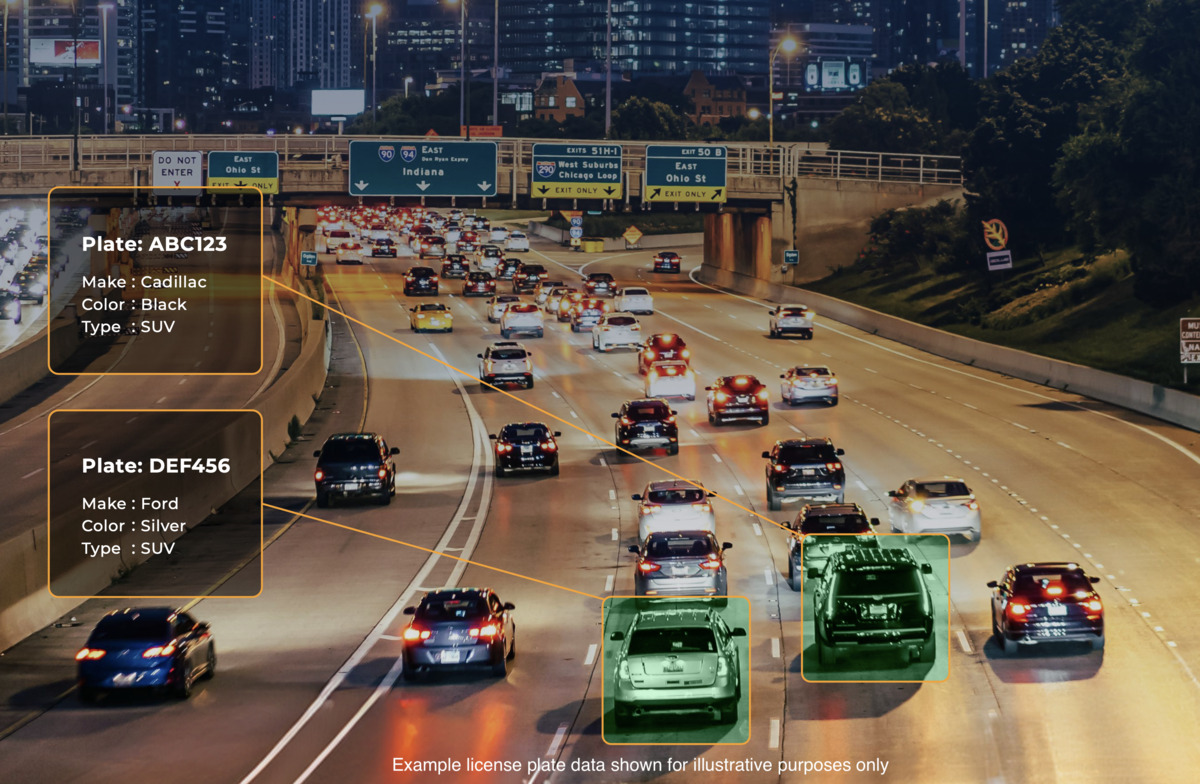
The camera captures raw images or video frames that contain vehicles moving through its field of view. The software then isolates the vehicles, locates the license plates, reads the alphanumeric characters, and extracts additional context such as vehicle type, make, model, and color.
This separation of roles is critical. A License Plate Recognition Camera provides the raw visual input, while the software converts that input into structured vehicle data that can be searched, analyzed, and used across the system.
2.2 Why license plate recognition depends on software processing
Real-world conditions are rarely consistent. Plates may be dirty, damaged, angled, or partially blocked. Lighting can change from bright sunlight to shadows to night-time glare. The ALPR software is designed to handle these variations and still produce reliable results.
This processing layer is what allows a License Plate Recognition Camera to perform well over time. As conditions change, the software adapts, ensuring that the system continues to deliver value without constant hardware changes.
3. The Role of Hardware and Software in an ALPR System
A complete ALPR system is made up of both hardware and software components, each with a clear role.
Before going further, it helps to clarify what “hardware” includes. Hardware is not just the camera. It also includes mounts, poles, brackets, lighting, network connectivity, and sometimes edge devices. Together, these components ensure that image data is captured and delivered reliably.
3.1 What the hardware contributes to an ALPR system
Hardware is responsible for capturing and transporting visual data. Cameras determine resolution, frame rate, and field of view, while mounts and positioning determine angles and stability. Lighting and network components ensure that images are usable and consistently available.
When hardware is planned correctly, it allows the License Plate Recognition Camera to operate within its optimal range. This creates the right conditions for accurate recognition and long-term system reliability.
3.2 What the software contributes to an ALPR system
Software is responsible for turning captured images into usable information. It reads license plates, stores data, enables search and alerts, generates reports, and supports integrations with other systems. Software also ensures that data from different locations and cameras is handled consistently.
Over time, software becomes even more valuable. As more vehicle data is collected across the system, analytics and reports become richer and more meaningful.
4. Key Camera Characteristics That Matter in an ALPR System
Certain camera characteristics influence how well an ALPR system performs, especially in challenging environments.
4.1 Resolution and frame rate
Resolution helps determine how much detail is captured, while frame rate affects how well moving vehicles are recorded. In wider scenes or multi-lane areas, higher resolution can be helpful. However, very high resolution also increases bandwidth and storage needs.
The goal is balance. The camera should be selected and configured to provide sufficient detail without unnecessary overhead, allowing the software to process data efficiently.
4.2 Shutter speed and vehicle motion
Shutter speed affects how clearly moving vehicles are captured. Faster shutter speeds reduce motion blur, which is especially important in higher-speed environments. However, shutter speed must be balanced with lighting conditions.
Together, camera configuration and software processing ensure reliable input across a wide range of vehicle speeds.
4.3 Camera angle, distance, and mounting
Placement has a major impact on capture quality. Cameras mounted too high, too far, or at steep angles may produce images that are harder to process. Stable mounting and thoughtful positioning improve consistency.
Good placement allows the License Plate Recognition Camera to capture clearer data and reduces the need for later adjustments.
4.4 Lighting conditions
Lighting changes throughout the day and across seasons. Cameras adjust exposure, but software is essential for handling glare, shadows, reflections, and low-light conditions. A strong ALPR system accounts for these variations without constant manual tuning.
5. Common Misunderstandings About License Plate Recognition Cameras
Some assumptions about cameras can lead to poor system design choices.
5.1 Assuming the camera alone determines success
It is easy to believe that choosing the “right” camera guarantees results. In reality, performance depends on the entire system working together. Camera selection, placement, lighting, and software processing all matter.
Even the best License Plate Recognition Camera will underperform if it is not part of a well-designed ALPR system.
5.2 Assuming hardware changes always fix problems
When results are not ideal, replacing the camera is often considered first. In many cases, system tuning, placement adjustments, or software configuration changes can solve the issue more effectively. Evaluating the full ALPR system before changing hardware leads to better outcomes.
6. Why Flexibility Matters in an ALPR System
Flexibility allows an ALPR system to adapt over time.
6.1 Using different cameras for different needs
Different environments have different requirements. High-speed roadways, low-light parking areas, and controlled access points may each benefit from different camera types. Different brands also have different strengths in these areas.
A flexible system allows organizations to deploy each License Plate Recognition Camera where it performs best, instead of being constrained by a single hardware option.
6.2 Keeping software consistent while hardware evolves
Camera models change more frequently than software platforms. By keeping the same software system in place while updating cameras as needed, organizations maintain consistent analytics and reporting.
Over time, this consistency becomes extremely valuable. As data accumulates across the system, analytics grow more powerful and insights become deeper.
7. When Camera Upgrades Make Sense
Camera upgrades should be driven by real needs, not assumptions.
7.1 Situations where new cameras help
Changes in speed, layout, lighting, or coverage may require different camera capabilities. In these cases, upgrading the camera can improve capture quality and system performance. The decision should be based on environment and use case.
7.2 Situations where tuning is enough
Often, performance issues can be addressed through configuration changes or software adjustments. Reviewing the system as a whole before upgrading hardware helps avoid unnecessary cost and disruption.
Conclusion: Bringing the ALPR System Together
A License Plate Recognition Camera plays an important role in any ALPR system, but it works best when viewed as part of a complete, well-designed solution. Cameras, mounting hardware, lighting, networking, and software all contribute to how reliably vehicle data is captured and turned into usable information. When these components are planned together, the system performs more consistently across different environments and conditions.
Over the long term, the real strength of an ALPR deployment comes from continuity. When the software platform remains stable while cameras are upgraded or mixed across brands, analytics and reports grow stronger with time. This is why choosing a flexible approach—rather than locking into a single Automatic License Plate Recognition Camera ecosystem—delivers lasting value.
Looking to elevate your security infrastructure with cutting-edge LPR solutions?
We are just a phone call away. Call us today at (813) 749-0892 for a free consultation.
LICENSE PLATE RECOGNITION (LPR): THE ULTIMATE GUIDE TO VEHICULAR INTELLIGENCE
PlateSmart’s deep dive into License Plate Recognition and its immense contribution to security agencies and businesses.
Frequently Asked Questions About License Plate Recognition Cameras
(The visuals on this page are stock images, used for illustrative purposes only)