
License Plate Reader
A practical overview of how modern license plate readers work and why ALPR has become essential for security and vehicle intelligence.
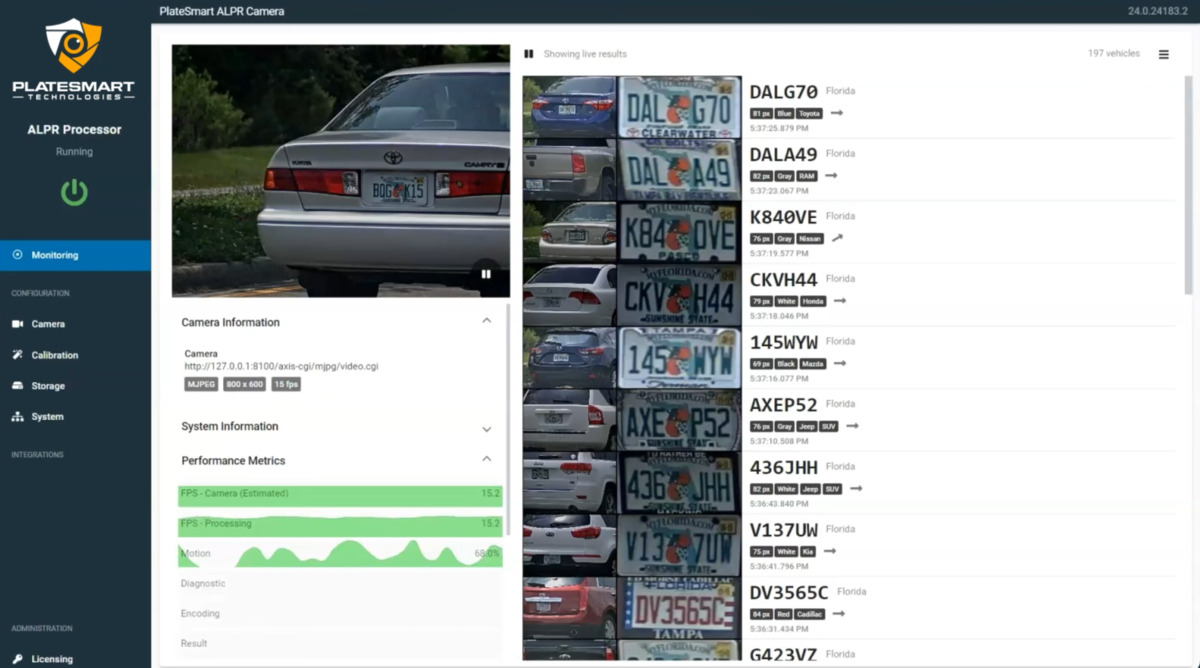
License plate readers have evolved far beyond being basic tools for reading plate numbers. Today, modern license plate readers sit at the center of law enforcement, security and operational intelligence, helping organizations understand vehicle movement in real time and over extended periods.
While license plate readers often use fixed or mobile cameras, the real value lies in the Automatic License Plate Recognition (ALPR) system as a whole—the software, analytics, and intelligence layer that turns passing vehicles into structured, searchable data. This is why license plate readers are now foundational across law enforcement, retail, hospitals, universities, hotels, and critical infrastructure.
This page explains what a license plate reader is, how it works in real-world conditions, and why it has become indispensable across so many environments.
What Is a License Plate Reader?
A license plate reader is a system designed to automatically detect vehicles and extract license plate data along with contextual vehicle information as those vehicles move through physical spaces.
Unlike general-purpose security cameras, a license plate reader is purpose-built to answer operational and investigative questions:
- Which vehicle entered or exited a location?
- When did it appear, and how frequently?
- Has it been seen elsewhere?
- Does its behavior indicate risk, relevance, or opportunity?
Modern license plate readers are typically deployed as part of an ALPR system that captures license plate data and enriches it with additional vehicle intelligence.
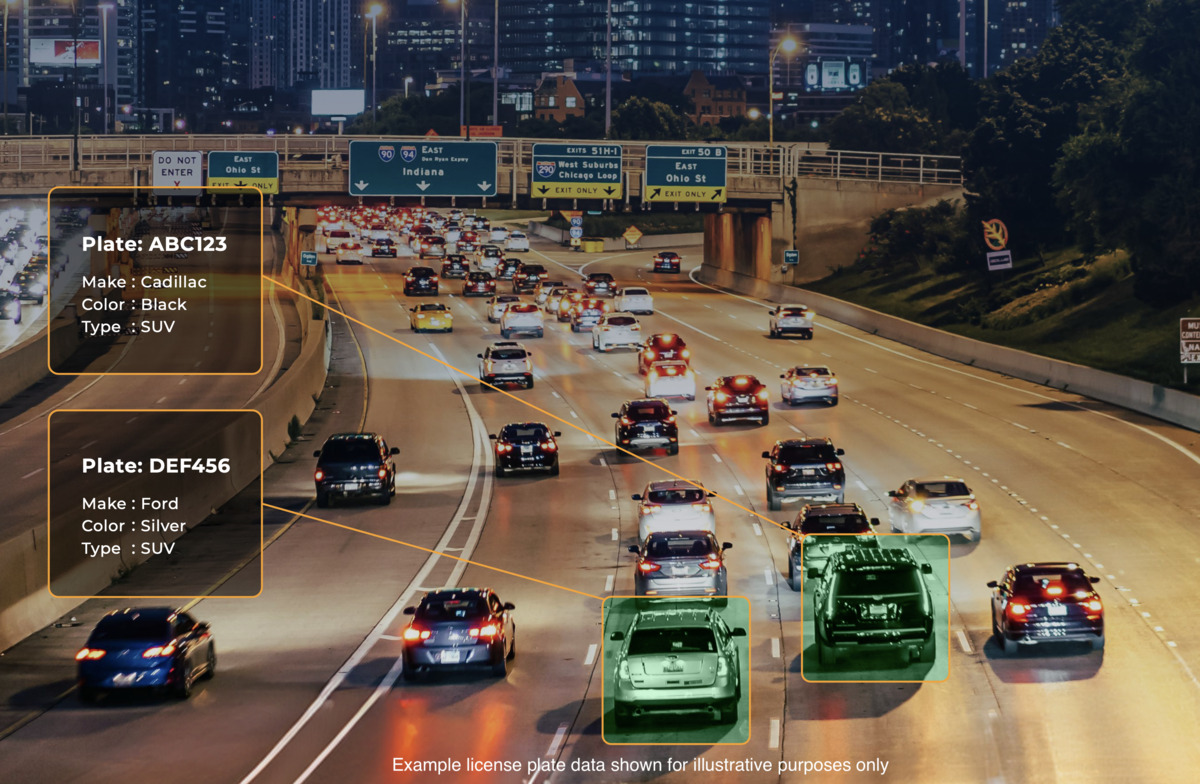
For example, PlateSmart not only captures license plate numbers, but also vehicle attributes such as make, model, color, precise timestamps, and high-quality vehicle images. This added context is critical when plate data alone is insufficient.
For readers who want a deeper conceptual foundation, PlateSmart’s Ultimate Guide to Vehicular Intelligence expands on terminology, system components, real-world use cases and deployment considerations in more detail.
How a License Plate Reader System Works
At a high level, a license plate reader system functions as a continuous intelligence pipeline rather than a single point-in-time capture. The goal is not merely to read a plate once, but to reliably recognize vehicles, associate them with context, and make that information usable for security teams and operators.
The ALPR system captures vehicle imagery as cars move through a scene, then applies AI-driven recognition to identify license plates and vehicle attributes. Those results are structured into searchable records that can trigger alerts, support investigations, or reveal patterns over time.
Modern ALPR platforms also use artificial intelligence to interpret partial, obscured, or imperfect plates. This is especially important when plates are dirty, damaged, angled, or deliberately altered. AI models trained on real-world data can often extract usable intelligence even when the full plate text is not perfectly visible.
Once vehicle data is captured, it must be transmitted reliably to centralized systems. This makes network connectivity a critical part of license plate reader deployments. Bandwidth availability, latency, and failover design directly affect how quickly alerts fire and how reliably data is retained.
As deployments scale, performance in uncontrolled environments becomes increasingly important. Lighting changes, weather conditions, vehicle speed, and camera angles all vary in the real world. A license plate reader system must be designed to perform consistently across these variables, not just under ideal conditions.
Why License Plate Readers Matter for Security
Nearly every security incident has a vehicle component. Criminals arrive at, and flee from, crime scenes in vehicles. Victims are often attacked in their vehicles or have their vehicles stolen. Vehicles are used to create distractions and stolen goods are also transported in vehicles.
A license plate reader turns this reality into an advantage by supplying actionable vehicle intelligence. Instead of relying on human observation alone, security teams gain continuous visibility into vehicle movement across locations and time.
License plate readers enable organizations to:
- Identify vehicles of interest earlier
- Reduce response times during active situations
- Preserve objective records for investigations
- Extend security coverage without adding personnel
License Plate Reader Applications by Industry
License plate readers are used across a wide range of industries because vehicle movement is a common thread across security, safety, and operations. While the underlying technology remains the same, the way license plate reader data is applied varies significantly based on industry needs and risk profiles.
Law Enforcement and Public Safety
For law enforcement agencies, a license plate reader acts as a force multiplier by extending visibility beyond what officers can observe in real time. ALPR systems continuously capture vehicle movement across patrol areas and fixed locations, helping agencies build intelligence that supports both proactive policing and post-incident investigations.
License plate readers are commonly used to:
- Recover stolen vehicles more quickly
- Identify fictitious plates and plate-swapping activity
- Detect repeat offenders and coordinated criminal behavior
- Respond to BOLOs and time-sensitive alerts
Over time, license plate reader data becomes especially valuable for reconstructing timelines, validating suspect movements, and connecting incidents that would otherwise appear unrelated.
License plate readers have helped law enforcement agencies stop imminent threats, including terrorism-related incidents, by delivering real-time alerts and actionable vehicle intelligence when time is critical.
They have also played a central role in solving complex investigations such as dismantling organized vehicle theft rings, uncovering large-scale credit card fraud operations, and demonstrating across multiple real-world use cases how vehicle intelligence strengthens modern policing.
Perimeter Security for Facilities
In perimeter security environments, the objective is not only to control access but to gain awareness before a potential threat reaches a sensitive area. License plate readers help extend the effective security perimeter beyond physical gates and checkpoints by monitoring vehicle movement along approach roads and entry points.
Organizations use license plate readers to:
- Detect vehicles of interest as they approach a facility
- Generate early alerts for security teams
- Maintain detailed vehicle access logs automatically
This approach allows security teams to prepare and respond without introducing friction for authorized vehicles. In perimeter security scenarios, even a few minutes of early warning can make a meaningful difference.
Hospitals and Healthcare Campuses
Hospitals operate in open, high-traffic environments where security must coexist with accessibility. Vehicles play a central role in many hospital-related incidents, from emergency drop-offs to disputes and investigations.
Healthcare organizations use license plate readers to:
- Document vehicle activity near emergency departments
- Support investigations involving patients, visitors, or staff
- Improve situational awareness across large medical campuses
- Automate staff parking access
These capabilities strengthen security operations without disrupting patient care or clinical workflows.
Educational Campuses
Educational campuses face unique challenges due to their open layouts, high vehicle volumes, and limited security staffing. Vehicles are involved in many campus incidents, whether as a means of access, transport, or departure.
Campuses use license plate readers to:
- Monitor vehicle access points discreetly
- Support investigations after incidents occur
- Manage parking and traffic during large events
- Improve overall campus safety planning
On large campuses, license plate reader data can provide security teams with vehicle-based visibility that would be difficult to achieve through patrols or manual monitoring alone.
Retail Environments
In retail settings, security challenges often extend beyond a single location. Organized retail crime and repeat offenders typically target multiple stores, making isolated incident response ineffective.
Retailers use license plate readers to:
- Identify repeat offenders across locations
- Link vehicle activity to theft and fraud incidents
- Strengthen collaboration with law enforcement
- Reduce chargebacks and losses
By focusing on vehicles rather than individuals alone, license plate reader data helps retailers gain a clearer picture of coordinated criminal activity.
Hospitality and Guest-Focused Properties
Hospitality environments use license plate readers not only for security, but also to improve operational efficiency and guest experience. Vehicle recognition allows properties to manage access and parking while maintaining a welcoming atmosphere.
Hospitality organizations can use license plate readers to:
- Streamline parking and valet operations
- Recognize returning or VIP guests
- Monitor vehicle activity across large properties
- Support property-wide security efforts
The result is a balance between protection and personalization.
License Plate Reader vs Traditional Security Cameras
Traditional security cameras record video. A license plate reader system creates structured vehicle intelligence.
When incidents occur, the difference is clear. Searching video manually is slow and uncertain. Searching license plate reader data is fast, precise, and repeatable.
Key distinctions include:
- Security cameras capture footage; license plate readers interpret vehicle activity
- Video requires review; ALPR data is instantly searchable
- Cameras show events; license plate readers reveal patterns
Most modern deployments use both, but license plate readers unlock the analytical value of security video.
Accuracy, Privacy, and Responsible Use
Accuracy and trust are essential in any automatic license plate reader deployment.
A well-designed license plate reader system provides:
- Consistent accuracy across lighting and weather conditions
- Clear data ownership and access controls
- Configurable retention policies
- Full auditability for accountability
These considerations ultimately shape how license plate reader data is governed, shared, retained, and trusted across agencies and organizations operating in real-world environments.
What to Look for in a License Plate Reader System
Selecting a license plate reader is a long-term decision. The data captured today may become critical evidence years later.
Organizations evaluating a license plate reader camera or platform should consider:
- Software-only versus proprietary hardware approaches
- Ability to capture vehicle attributes beyond plate text
- Real-time alerts combined with deep historical search
- Integration with existing security infrastructure
- Scalability across locations and use cases
Taking a structured approach to evaluation helps organizations avoid costly missteps and ensures the license plate reader system they choose aligns with long-term operational and investigative needs.
Final Perspective
A license plate reader is no longer just about reading plates.
It is about understanding vehicle movement, behavior, and context across time and space. When deployed thoughtfully, a modern license plate reader system strengthens security, improves response times, and turns everyday traffic into actionable intelligence.
That is why license plate readers have become a foundational element of modern security strategies—and why their role will continue to expand.
Looking to elevate your security infrastructure with cutting-edge LPR solutions?
We are just a phone call away. Call us today at (813) 749-0892 for a free consultation.
LICENSE PLATE RECOGNITION (LPR): THE ULTIMATE GUIDE TO VEHICULAR INTELLIGENCE
PlateSmart’s deep dive into License Plate Recognition and its immense contribution to security agencies and businesses.
Frequently Asked Questions About License Plate Readers
(The visuals on this page are stock images, used for illustrative purposes only)